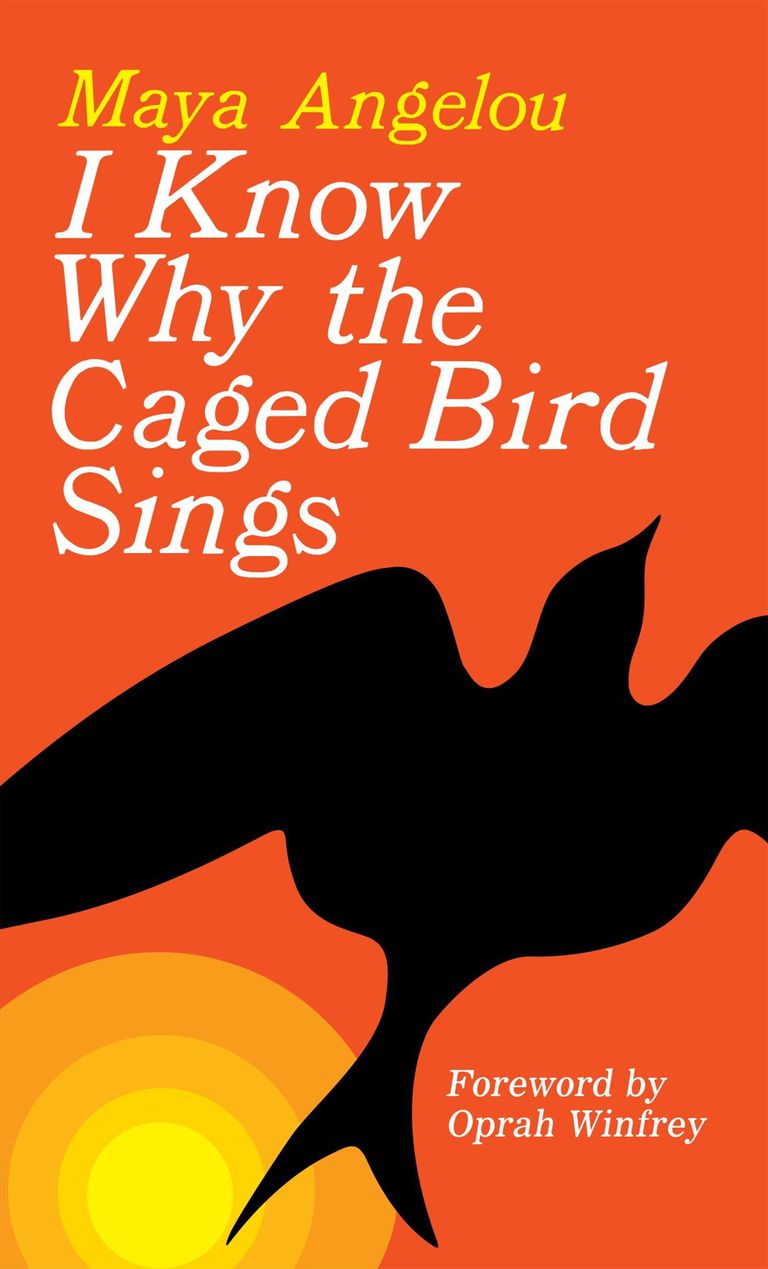
I Know Why the Caged Bird Sings
Reviewed on August 16, 2026
Ehhh. That’s the first thought that came to mind when reviewing this book. I am
admittedly not the biggest reader and have the attention span of a squirrel….and this
book was a strugggggle to get through. If a book could be monotone, it would be this
one. This is not a book for entertainment purposes. There isn’t a climax with a steady
buildup of tension. It’s just a flat read.
Now…that’s not to say the book was a waste of time, not at all! If you are reading the
book for educational purposes, specifically to expand your awareness of racism in the
United States, this book is a good read. The novel is an autobiography of Maya Angelou’s
childhood in the 1930’s to 1940’s, and solidly captures the awful bullshit that black
people had to face on a DAILY basis.
One small, but poignant, part of the book for me was chapter 24. Marguerite (Maya) was
in debilitating pain from two rotting teeth and needed immediate dental care. The
problem was, there weren’t any “Negro” dentists in town. The closest one was a 25 mile
bus ride away. Most of us have experienced dental pain, and a bumpy-multiple-hour bus
ride when you are in excruciating pain feels like being asked to climb Everest when you
can’t even open your mouth without passing out. But Marguerite’s Momma Annie (who was
really her grandmother) knew the town’s white dentist who owed her a favor (like loaning
him money with no interest to save his business from closing during the Great
Depression…you know…a small favor ~insert alllll the sarcasm here). So Marguerite is
brought to said dentist and is quickly told “my policy is I’d rather stick my hand in a
dog’s mouth than in a n—er’s” (chapter 24, pg 189).
Of course the atrocities of racism in the United States, past and present, such as
lynchings, murder, imprisonment, rape, maiming, and so on, are all horrifying. What
isn’t talked about nearly as much, and is equally horrible in other ways, is the DAILY
struggle to live a basic normal life. You can’t even get medical care without a
struggle.
As a female myself, I find it sometimes difficult to explain to the male side what it’s
like being discriminated against over something you have no control of…your gender. I
can only imagine it’s similar in regards to discrimination in the form of racism. So
while I started my review with a bit of a harsh bashing, I do stand by my comment that
this book is worth reading. As I read, I was consistently reminded of my privilege. In
some ways I already knew (but needed a reminder) and in other ways I didn’t even think
of.
As a privileged-cis-straight-middle-class-white-female living in America 80+ years later
from the setting this book was written, maybe I didn’t find this book captivating
because I’m not the target audience? Or maybe I am? I don’t know what it’s like being a
black female and having a childhood in the pre-civil rights era. I may not have
identified with Maya on a personal level, but I could at least reach her to some degree
on a human level. I finished this book with, at the very least, a marginal better
understanding of the daily racism against black children in America.